Portland is the UK's single biggest sport-climbing destination. Over 1,000 bolted limestone routes on a series of low-lying sea cliffs and quarries on the Isle of Portland in Dorset, with grades from F3 introductory through to F9a world-class hard sport. Year-round climbable thanks to the southern coastal location, accessible by train from London in three hours, and the only English destination that genuinely competes with the European sport-climbing crags for sheer volume of routes per square mile.
At a glance
| What it is | The UK's biggest single sport-climbing destination — over 1,000 bolted limestone routes on a 4-mile-long island peninsula |
| Main areas | The Cuttings (the central beginner area) · Blacknor (west coast) · Battleship Edge (north sea cliffs) · New Cuttings (harder sport) · Cheyne Wears (north-east) |
| Climbing style | Almost entirely sport on bolted limestone; small trad scene on the more remote cliffs; bouldering on the foreshore boulders |
| Season | October to April is peak — south-facing cliffs get too hot in midsummer; year-round climbable in cooler windows; spring and autumn are the sweet spots |
| Grade range | F3 (Cuttings beginner routes) through to F9a (hardest modern sport routes); thousands of mid-grade routes between |
| Travel from London | 3 hours by train (London Waterloo to Weymouth, then 15-min bus to Portland) or 3 hours by car |
| Cost | Free to climb at all crags; Portland Sport guidebook (~£25) covers the whole island |
Why climbing on Portland is different
Three things separate Portland from every other UK climbing region. First, the volume. Over 1,000 documented routes on a single 4-mile-long island peninsula — more than the entire Lake District, the entire Peak District limestone, or any single Welsh region. The density makes Portland the only UK destination where you can spend a week climbing every day on a different cliff and not see the same route twice.
Second, the climate. Portland's southern position (latitude 50.5°N — further south than Calais) and sea-influenced microclimate mean it stays climbable when northern England and Wales are wet and cold. October through April is the standard Portland season; June through August is often too hot on the south-facing cliffs. This is the only UK destination that follows a continental sport-climbing season rather than the standard British summer-only rhythm.
Third, the rock. Portland limestone is a single uniform Jurassic limestone laid down 145 million years ago — pocketed, water-sculpted, weathered into perfect sport-climbing texture. The same stone built the dome of St Paul's Cathedral and most of Buckingham Palace. The geological consistency means the climbing style is consistent across cliffs — a route at one Portland area feels similar to a route of the same grade at another, in a way that doesn't happen at the rock-varied venues like Snowdonia or Scotland.
The crags worth knowing in this guide
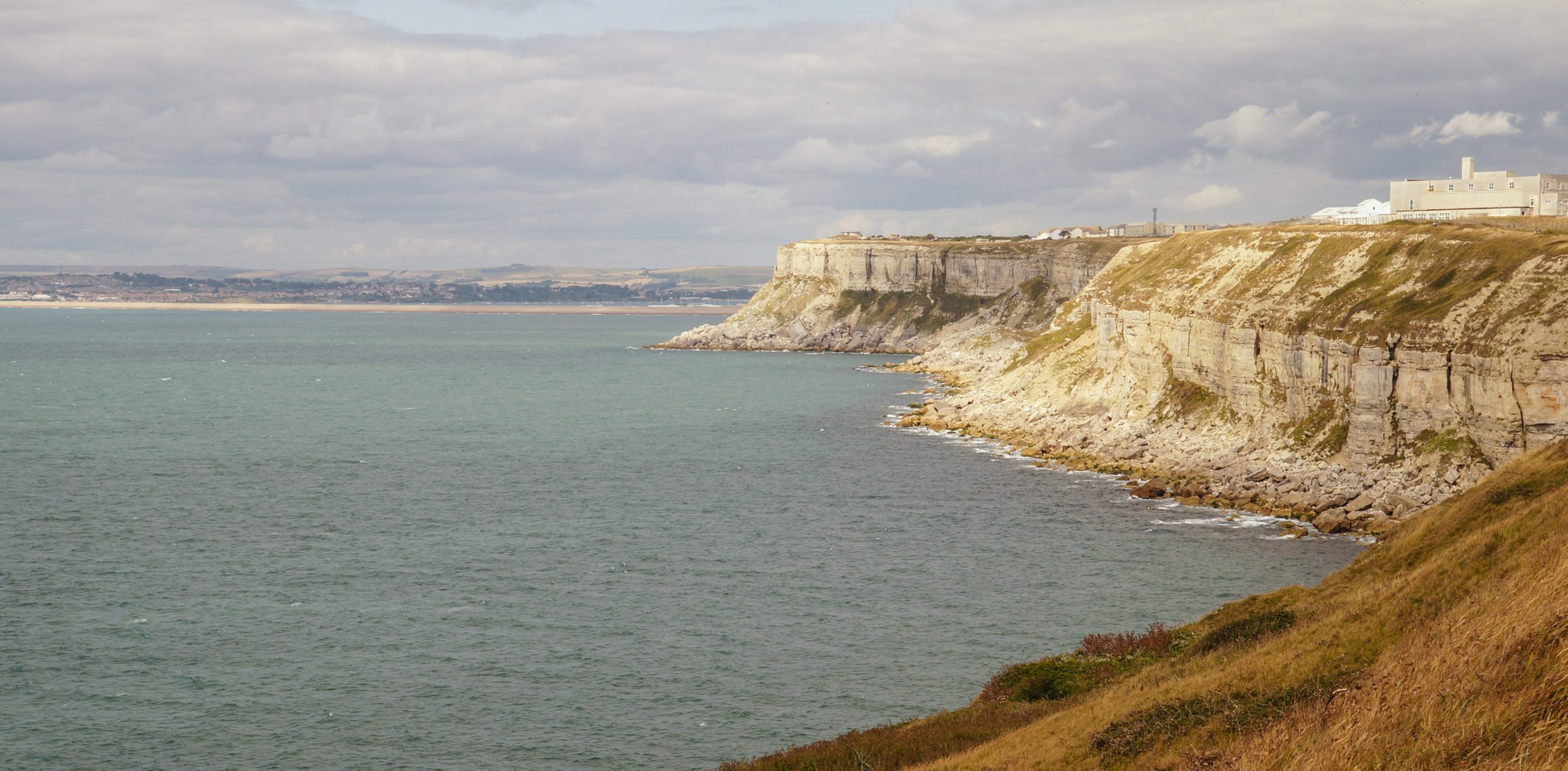
Portland rock climbing — Isle of Portland, Dorset
The Portland climbing scene clusters around five main areas. The Cuttings is the central beginner zone — easy access, F4-F6a single-pitch routes on smooth limestone. Blacknor on the west coast has longer, harder routes with proper sea-cliff position. Battleship Edge on the north coast adds atmospheric multi-pitch options on iced limestone. The New Cuttings hold the harder modern testpieces (F7+ and above). Cheyne Wears on the north-east is the quieter alternative with a similar grade range to Battleship Edge.
The Cuttings — the standard introduction
The Cuttings is the busiest and most accessible Portland area. Dozens of F4-F6a routes on smooth pocketed limestone with five-minute walk-in from the Cuttings car park. The standard first-time Portland sport-climbing area for visiting climbers and learner groups. Most BMC-affiliated Portland climbing schools (Climbsource Portland, Highball Climbing) run Cuttings intro days. The rock is generally clean and the routes well-bolted; the area can be busy on weekends.
Blacknor — the long west-coast routes
Blacknor on the west coast has the longest Portland routes (some up to 35m of single-pitch climbing) with proper sea-cliff position and west-facing afternoon sun. Routes range from F5 to F8. The walk-in from the Blacknor car park is 10 minutes; the cliffs sit just above the high-tide line. Best ridden in afternoon sun in autumn or spring.
Battleship Edge and Cheyne Wears — atmospheric sea cliffs
Battleship Edge on the north coast and Cheyne Wears on the north-east coast give the proper Portland sea-cliff experience — abseil-in access, position above the Channel, routes from F5 to F8a. Battleship Edge is the more popular of the two; Cheyne Wears is the quieter alternative with similar grade range. Both require confidence with abseil-in access; allow time for the descent and ascent rope work.
The New Cuttings — hard modern sport
The New Cuttings (separate from the original Cuttings area) holds the harder modern routes — most are F7+ to F8c with a few F9a testpieces. The area is the home of the modern Portland hard-sport scene and gets significant attention from the country's leading sport climbers. Best avoided as a first-Portland-visit unless you're operating consistently at F7+.
How to choose the right Portland climb for you
First Portland sport-climbing day?
The Cuttings, every time. The original Cuttings area has dozens of F4-F6a routes with short walk-in and easy access. Climbsource Portland and Highball Climbing both run Cuttings intro days. Take quickdraws (10-12), single 70m dynamic rope, helmet, harness, grigri. The rock is friendly to new sport climbers — pockets, edges and rests at predictable intervals.
First UK sport-climbing trip ever?
Portland is the easier UK destination for a first sport trip — over the Peak District limestone (Cheedale, Stoney) it has more volume and more accessible grades. Plan a 3-day visit, base in Weymouth or Portland village, work through the Cuttings on day 1, Blacknor on day 2, and Battleship Edge on day 3. The on-island climbing schools handle full-kit hire.
Looking for the harder testpieces?
The New Cuttings is the standard Portland hard-sport venue. Hueco Wall, Lost Boys and the harder routes on the New Cuttings cliffs give F7-F8 territory. The world-class hard-sport routes (F8c-F9a) live here as well. Most strong UK sport climbers do annual Portland trips for the volume and the consistent grade range.
Want to combine with other south-coast climbing?
Swanage (40 minutes by car) adds traditional sea-cliff climbing on the Dorset coast — Boulder Ruckle and the Subliminal area are the classics. The Old Harry sea stacks at the eastern end of the Purbeck cliffs give shorter routes in atmospheric position. Bowles Rocks south of Tunbridge Wells is the next-step indoor-to-outdoor venue on the way back to London.
Family or beginner-friendly day?
The Cuttings has the easiest Portland access for total beginners — five-minute walk from the car park, F3-F5 routes with predictable rests. Climbsource Portland runs family taster sessions on Sunday mornings; check their booking site for current availability. Bring a child-size harness if you have one — the on-site shop hires from age 7.
When to go: Portland climbing by season
| April–May | Peak Portland sport season. South-facing cliffs warming up, sea-spray clearing from winter, weekend crowds modest before the school-holiday rush. Excellent month. |
| June–August | Many south-facing cliffs too hot for hard sport climbing. The Cuttings stays workable in morning sessions and on overcast days. North-facing cliffs (Battleship Edge, Cheyne Wears) hold up better in heat. |
| September–October | The other peak Portland window. Sea-spray-free conditions, cooling temperatures, good friction on the rock, autumn colour along the Dorset coast. The standard October trip for southern sport climbers. |
| November–March | Year-round climbable in cooler windows. Sea-spray returns on stormy west-wind days but the south-coast climate keeps most weeks workable. Cuttings and Blacknor in particular ride through winter. |
Getting to Portland climbing without a car
Portland is one of the most car-free-friendly UK climbing destinations because of its rail access. Weymouth railway station is on the South Western Railway line from London Waterloo (3 hours direct). From Weymouth, the First Wessex 1 bus runs every 15-20 minutes to Portland Island, with stops near the Cuttings, the Easton village climbing shops, and the Portland Heights Hotel.
From Portland village, walking to the Cuttings is 15 minutes; Blacknor 25 minutes; Battleship Edge 30 minutes. Most Portland climbers either stay in Weymouth and take the bus daily, or stay in the Portland villages (Easton, Fortuneswell) and walk to the cliffs.
The on-island climbing shops (Portland Sports, the Outpost) handle kit hire including quickdraws, ropes, harnesses and helmets — useful for visiting climbers without their own kit. The Portland Sport guidebook (Rockfax) is sold at both shops and at the Outside climbing shop in Hathersage (Peak District) for visitors who want to pre-buy.
Where to base yourself
Weymouth: The natural urban base for Portland climbing. Mainline railway station, restaurants, supermarkets, the Lookout Café as a climber hangout. 15-20 minute bus to Portland Island; the daily commute is faster than the equivalent in any other UK climbing region.
Fortuneswell / Easton (Portland Island): B&Bs and self-catering cottages on Portland itself. Closer to the climbing, fewer amenities than Weymouth. The Portland Heights Hotel is the climber-favourite mid-range option. Easton village pubs (the Cove, the Mermaid) are the local climber social hubs.
Lulworth Cove area (20 minutes east): For trips combining Portland sport climbing with the Jurassic Coast walking and the Lulworth-area Purbeck climbing. Lulworth has B&Bs and the Lulworth Cove Inn. Adds variety to a single-discipline Portland trip.
The wider south-coast climbing scene includes Swanage (Dorset trad sea cliffs) and Boulder Ruckle (more Dorset trad). For cross-discipline trips, the Surfing in Devon umbrella covers the surf scene west of Portland.
Kit specific to Portland climbing
Sport climbing rack: 12-15 quickdraws (most Portland routes are 6-12 bolts), single dynamic 70m rope (long enough to lower from any single-pitch route on the island), helmet, harness, grigri or similar lower-off device, climbing shoes that take edges well. Limestone-friendly shoes work better than soft sport shoes — the Portland rock rewards good footwork.
Abseil-in kit (for Battleship Edge and Cheyne Wears): 60m static rope, abseil device, a personal anchor system, second climbing rope for the climb back out. Most parties carry two ropes when working abseil-in cliffs — one for the descent, one for the climbing.
Sea-cliff specifics: a chalk bag with a brush (the sea-spray can leave salty residue that needs cleaning off holds), a windproof jacket for the breezier days on the west cliffs, and an awareness of the tides — some lower-cliff abseil-in routes (especially Battleship Edge approaches) become inaccessible at high tide.
Common questions about rock climbing on Portland
What is Portland known for in climbing?
Portland is the UK's biggest single sport-climbing destination — over 1,000 bolted limestone routes on a series of low-lying sea cliffs and quarries on the Isle of Portland in Dorset. The climbing is concentrated in five main areas: Battleship Edge, Cuttings, The Cuttings, Blacknor and the New Cuttings. Grades run from F3 (introductory) to F9a (world-class hard sport). Year-round climbable thanks to the southern location and sea-influenced microclimate.
Can a beginner climb at Portland?
Yes — Portland is one of the easiest UK introductions to sport climbing. The Cuttings area has dozens of F4-F6a bolted routes with short walk-ins and ground-level abseil-in access. Most BMC-affiliated climbing schools running on the south coast (Climbsource Portland, Highball Climbing) can run a single-day intro course with kit included. For self-guided beginners, the Portland Sport guidebook (Rockfax) is the standard buy.
When is the best time to climb at Portland?
October to April is the standard Portland season — the southern location means it stays climbable when the Lake District and Peak are wet and cold. Summer (June-August) gets too hot on the south-facing cliffs; many climbers wait for cooler shoulder months. The sea-cliff microclimate keeps the temperatures moderate year-round, but morning sessions or shaded north-facing crags work better in mid-summer.
Is Portland trad or sport climbing?
Almost entirely sport — Portland's climbing is built around bolted limestone routes with permanent fixed protection. A small number of trad routes exist on the more remote cliffs but the area's reputation is sport. The bolts are maintained by the local climbing community via the BMC; respect the fixed equipment and report any bolt issues via the BMC's online portal. A standard sport rack (quickdraws, single rope, helmet) is all you need.
Where do I start climbing at Portland?
The Cuttings area is the standard first stop — easy access from the Cuttings car park, dozens of F4-F6 introductory routes, predictable rock quality. The Battleship Edge area adds harder routes and the iconic sea-cliff position. Blacknor sits on the western coast with longer routes and more remote feel. Avoid the New Cuttings as a first visit — the routes there are mostly F7+ and the access requires confidence with abseil. The Portland Sport guidebook covers the whole island with topo diagrams.
Where to climb
in Portland.
Plan it yourself.
The most authoritative sources we know of for this crag — routes, conditions, governing bodies and operators. Open in a new tab.
- BMC British Mountaineering Council — the national body for climbing in England and Wales.
- BMC Regional Access Database crag-by-crag access status and seasonal restrictions (bird nesting etc).
- UKClimbing route database, conditions reports and the most active climbing forum in the UK.
- Mountaineering Scotland Scottish counterpart to the BMC.