Devon’s surf coast runs along the north shore from Bideford Bay to Lynton — about 30 miles of long sandy beaches that catch a softer, more forgiving version of the same Atlantic swell that hits Cornwall. The wave is smaller, the line-ups are friendlier, and the learning curve is gentler. For most beginners and intermediate surfers, this is the better English coast to start on. For experienced surfers, it’s the easier weekend trip from London or Bristol.
What follows is the directory’s read on Devon surfing — the beaches worth knowing, when they work, how to get there without a car, and what makes North Devon different from Cornwall next door. The page links through to a write-up of every individual break we cover.
The breaks
Croyde Bay is the heart of Devon surfing. Big, well-formed beach break that holds size better than its neighbours, a tight-knit local scene, and a village that punches well above its weight for surf-related infrastructure. When the conditions line up, Croyde rivals anywhere in southern England. When they don’t, it’s still the most reliable wave in the area.
Saunton Sands, two miles north, is the long forgiving beginner’s break — three miles of even sandbar, mostly mellow waves, plenty of room to spread out. Saunton is the standard answer to “where do I take a first surf lesson in Devon?” for anyone driving down from the South-East.
Woolacombe and Putsborough sit between Croyde and the Morte Point headland — another long beach with consistent waves across the tides. Woolacombe is the busier end (town, hotels, lifeguards); Putsborough at the south end is quieter and works well at lower tides when Woolacombe’s sandbars are flat.
Bantham and Bigbury-on-Sea sit on the south coast in the South Hams — smaller, less consistent waves than the north coast, but a useful fallback when Atlantic swell is too big for the north or when north-facing wind closes everything out. Bantham at low tide is one of the prettier surf settings in England, with Burgh Island sitting offshore.
Westward Ho! (the only English place name with an exclamation mark) is the long pebble-backed beach east of Bideford — consistent waves, less crowded than Croyde, and the home break for several of the more established North Devon surf schools.
When to go
For learners: late May through September. Water temperature reaches 16-17°C in August, swells are smaller and cleaner, and almost every Devon beach has lifeguard cover. Schools run from Easter through October; book Croyde or Saunton lessons mid-week in summer to avoid the worst of the weekend crowds.
For improving surfers: September through November is the sweet spot. Atlantic swell starts to build, water’s still warm enough for a 3/2mm wetsuit, and the summer crowds have gone home. November through February delivers the bigger conditions; water drops to 8-10°C and a full 5/4mm wetsuit with hood and boots is standard.
The standard forecast tools are Surfline (formerly Magicseaweed) for swell, the Met Office marine forecast for wind, and the local surf school webcams (most run live feeds on their websites). Cross-offshore wind from the east, swell from the west, mid-tide — that’s the standard formula.
Getting there without a car
This is where Devon gets harder. The Tarka Line from Exeter St Davids to Barnstaple is the only rail link into surf country, with the closest stations to Croyde (Barnstaple, then 20 min bus on the 308) and to Saunton (Barnstaple, then 25 min bus on the 309). From London, Paddington to Barnstaple takes about 4 hours with the change at Exeter; from Bristol Temple Meads, around 2 hours 30.
The 21 Stagecoach bus from Barnstaple runs through Croyde and Saunton roughly every 30 minutes in summer, less frequently in winter. Several Devon surf schools offer board hire that includes Barnstaple pickup; check ahead if you’re train-only.
For Bantham and Bigbury on the south coast, the access point is Plymouth (2.5 hours from London Paddington) and then the 875 bus — less frequent, more rural. South coast surfing in Devon is a less practical car-free option than the north.
Where to stay
Croyde village has the densest cluster of surf-friendly accommodation in North Devon — B&Bs, the Thatch Inn, a couple of small hotels, and Mitchum’s Campsite (a Croyde institution) within walking distance of the beach. Braunton is the larger inland town that serves both Croyde and Saunton with more budget options and easier bus links.
Woolacombe and Mortehoe on the headland to the north have their own accommodation cluster, slightly cheaper than Croyde and equally walkable to the beach. Westward Ho! works as a base for anyone surfing both there and Croyde — cheaper than the Croyde village rates, with a more workaday feel.
Camping is the cheapest way to surf North Devon for a weekend — Mitchum’s (Croyde), Putsborough Sands (the namesake beach), and Bay View (Croyde) are the standard surfer campsites. Most take walk-ups outside peak weeks; pre-book bank holidays.
What makes Devon surfing different
Three differences from Cornwall, mainly. The first is wave size: Devon catches Atlantic swell that’s already lost some of its punch by the time it reaches the north shore. That’s a downside if you want big winter conditions, an upside if you’re learning or improving. The second is access — Croyde and Saunton are 4 hours from London by train, but most of the breaks are within a 20-minute drive of each other, so a weekend trip can cover multiple beaches if conditions shift. The third is the scene: tighter, smaller, more local. Cornwall has industry-scale surf culture; North Devon has village-scale surf culture, and locals will know your face by the third visit.
Devon versus Pembrokeshire: Pembrokeshire has bigger waves and quieter beaches but requires more effort to reach. Devon versus the rest of England: nothing east of Devon has comparable consistency — the Channel coast picks up occasional Atlantic wrap and the Norfolk/Yorkshire coasts catch North Sea swells, but neither delivers Devon’s reliability.
Safety and lifeguards
RNLI lifeguards cover the busy Devon surf beaches (Croyde, Saunton, Woolacombe, Westward Ho!, Bantham, Bigbury) from late May to mid-September. Outside the season, surfing is still common at the major breaks, but rescue cover is limited — carry a leash, surf with a buddy, and learn to read a rip before paddling out at an unfamiliar beach.
The biggest single hazard at most North Devon beaches is the tide. The Bristol Channel has the second-largest tidal range in the world (after the Bay of Fundy); low and high water at Croyde or Saunton can shift the wave-quality and the safe paddle zone significantly within a couple of hours. Most local schools build the daily tide chart into their first lesson; non-locals should do the same before any session.
Where to surf
in Devon.

Bantham Beach Surfing in Devon
Bantham Beach is part of the south Devon coast at the mouth of the River Avon, two miles east of Bigbury. Together with Bigbury,…

Bigbury Beach Surfing in Devon
Bigbury-on-Sea sits on the south Devon coast at the mouth of the River Avon, with Burgh Island (and its art-deco hotel) just offshore. The…

Croyde Bay Surfing in Devon
Croyde Bay on the north Devon coast is the most consistent UK beach break for intermediate and advanced surfers — a heavier, more powerful…

Putsborough Beach Surfing in Devon
Putsborough is the quieter southern end of the Putsborough-Woolacombe three-mile beach in north Devon — the section preferred by surfers wanting a less crowded…
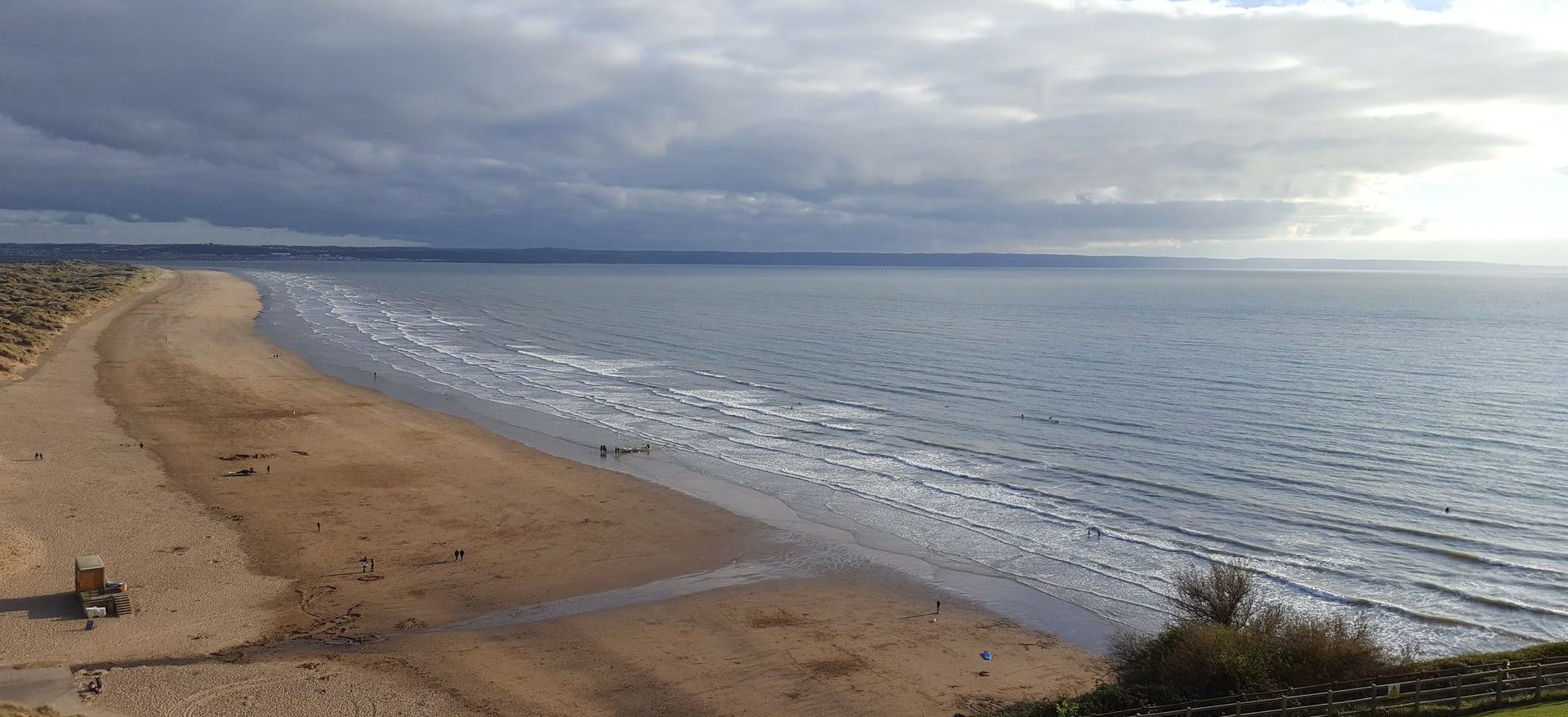
Saunton Sands Surfing in Devon
Saunton Sands is a three-mile sweep of beach south of Croyde — gentler, longer, sandier — and the best longboarding wave in England. It's…

Westward Ho! Surfing in Devon
Westward Ho! is the longest-established surf town in the UK — the British Surfing Association was founded there in 1966, and the beach has…

Woolacombe Beach Surfing in Devon
Woolacombe Sands is a three-mile beach on the north Devon coast between Croyde and Saunton — the longest dedicated surf beach in Devon and…


Plan it yourself.
The most authoritative sources we know of for this break — routes, conditions, governing bodies and operators. Open in a new tab.